
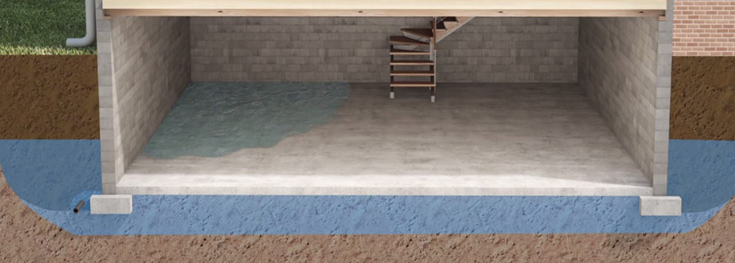
The Dangerous Myth of the “Normal” Wet Basement
Walk into almost any old neighborhood in America and knock on a door. Ask the homeowner about their basement. More often than not, you will hear some version of the same resigned shrug: “Oh, it gets a little wet sometimes. That’s just how it is with these old houses.”
It is one of the most costly myths in homeownership.
There is no such thing as a normal wet basement. There is no acceptable level of water intrusion. A basement that floods seasonally, seeps after every rain, or simply smells damp year-round is a basement that is actively destroying your home — and potentially your family’s health — one rainstorm at a time. The good news is that every wet basement problem has a solution, and finding the right one is far simpler than most homeowners imagine.
Where Is the Water Coming From? Diagnosing Basement Water Problems
Effective wet basement solutions begin with accurate diagnosis. Water can enter a basement through several distinct pathways, and each requires a different approach.
Through the Walls
Water seeping through poured concrete or block walls typically results from hydrostatic pressure — saturated soil pressing water through the porous structure of your foundation. You may see wet patches, efflorescence (white mineral deposits), or active streams running down the wall. This is among the most common wet basement scenarios and responds beautifully to interior drainage systems, exterior waterproofing membranes, or a combination of both.
Through Wall Cracks
Vertical cracks in poured concrete walls are usually the result of normal concrete curing and settling — but they are not harmless. Once cracked, water exploits that pathway aggressively. Horizontal cracks are far more serious, suggesting soil pressure is literally bowing the wall inward. Any horizontal crack in a foundation wall is a structural emergency that demands immediate professional attention.
Through the Floor
Water welling up through the basement floor or appearing at the joint where the floor meets the wall (“cove seepage”) indicates a high water table pressing up from below. This type of infiltration cannot be stopped by surface coatings or sealers — it requires active management through interior drainage channels and a sump pump system that can outrun the incoming water.
Through Windows and Window Wells
Basement windows below grade are notorious entry points for water, especially when window wells fill with debris or are improperly graded. This is often the simplest problem to address, requiring window well covers, improved drainage, and sometimes window replacement or sealing.
Surface Water and Poor Grading
If your yard slopes toward your home rather than away from it, every rainfall delivers water directly to your foundation. Correcting grading issues and improving surface drainage can dramatically reduce water pressure against foundation walls, often complementing other waterproofing measures.
Proven Wet Basement Solutions That Actually Work
Interior French Drain Systems
An interior French drain — also called a perimeter drainage system or weeping tile system — is installed beneath the basement floor along the perimeter walls. It intercepts water before it can rise onto the floor, channeling it into a sump pit. This solution is particularly effective for floor seepage, cove seepage, and wall seepage, and it is far less disruptive than full exterior excavation. Professional installation typically involves cutting a trench around the perimeter of the basement floor, laying perforated pipe in a bed of gravel, and restoring the concrete over it. The result is virtually invisible and extraordinarily effective.
Sump Pump Installation and Replacement
A sump pump is the workhorse of any wet basement solution system. Modern submersible sump pumps can move thousands of gallons per hour, keeping pace with the worst groundwater intrusion during heavy storms. Key considerations include pump horsepower matched to your specific water volume, a battery backup system for power outage protection, and a water alarm to alert you to any malfunction. Do not trust your basement to an underpowered or aging sump pump — a pump failure during a major storm can result in catastrophic flooding within hours.
Exterior Waterproofing Membrane
For homeowners who want the most comprehensive solution available, exterior waterproofing is unmatched. The process involves excavating down to the foundation footing, cleaning and preparing the exterior wall surface, and applying a high-performance waterproofing membrane — often a rubberized asphalt compound, crystalline system, or dimple mat — that creates a continuous barrier against water intrusion. A drainage board is then installed to channel water down to a footing drain that carries it safely away from the structure. Though more involved and costly upfront, exterior waterproofing addresses the root cause rather than managing symptoms.
Crack Injection
For localized wall cracks, professional injection sealing is a precise and permanent solution. Polyurethane foam injection stops active water seepage immediately; it expands to fill every void in the crack and cures flexible enough to accommodate future minor movement. Epoxy injection is used where structural restoration is the priority, chemically bonding the crack faces together with tensile strength exceeding that of the original concrete. Both methods are performed from the interior with minimal disruption.
Vapor Barriers and Encapsulation
In crawl spaces and basements where general moisture — rather than active water intrusion — is the primary concern, high-quality vapor barriers and wall encapsulation systems can dramatically reduce humidity levels. A properly installed vapor barrier system, combined with appropriate ventilation or dehumidification, transforms a damp, musty crawl space into a clean, dry environment that contributes positively to the air quality of the entire home above it.
The Hidden Costs of an Unaddressed Wet Basement
Ignoring a wet basement is not a neutral choice. Every month that water enters unchallenged, the damage compounds:
Structural deterioration: Freeze-thaw cycles widen cracks; sustained moisture rots wood beam ends and corrodes steel lally columns; hydrostatic pressure can eventually cause wall failure.
Mold remediation costs: Professional mold remediation for a finished basement can cost anywhere from $5,000 to $30,000 or more, depending on severity — far exceeding the cost of the waterproofing that would have prevented it.
HVAC efficiency loss: A wet basement raises relative humidity throughout the home, forcing air conditioning systems to work harder and run longer — increasing energy bills month after month.
Home value impact: Buyers and home inspectors flag water intrusion immediately. A known wet basement problem can reduce your home’s market value by 10% to 25% and derail sales entirely.
Health impacts: Mold exposure is linked to respiratory illness, allergic reactions, asthma exacerbation, and in cases of certain mold species, far more serious health consequences.
How to Choose a Wet Basement Specialist You Can Trust
The wet basement waterproofing industry, unfortunately, has its share of fly-by-night operators and high-pressure sales tactics. Protect yourself by following these guidelines:
Get at least three written estimates from established local companies. Be wary of any contractor who cannot provide local references or proof of insurance. Ask specifically about warranties — are they backed by the company itself, or by a third-party insurance bond? Understand exactly what is and is not covered. A contractor who pressures you to sign immediately or offers a “today only” price is a contractor to avoid.
Look for companies that have been in business locally for many years, carry proper licensing and insurance, and offer warranties that are transferable to new homeowners — a sign that they stand behind their work long-term.
Your Dry Basement Is Waiting
The technology, expertise, and materials exist right now to permanently solve your wet basement problem. You do not have to live with the smell, the anxiety before every storm, or the quiet, steady loss of your home’s structural integrity and market value. A professional evaluation is typically free, and the solutions are more affordable — and more permanent — than most homeowners expect.
Take the first step today. Your basement can be dry. It should be dry. And with the right professional partner, it will be.
Contact Expert Foundation Waterproofing for a free, no-pressure basement inspection. We diagnose the true source of your water problem and recommend the most effective, most affordable solution — backed by our industry-leading warranty.