When the floodwaters swept through #hundreds of American communities in the record-breaking flood seasons of 2024 and 2025, homeowners across the country faced a brutal reality: their foundations were not built to withstand what climate scientists had been warning about for years. News outlets from #The New York Times to #BBC News ran wall-to-wall coverage of the crisis. Social media exploded with images of flooded basements, crumbling foundations, and families displaced overnight.
The topic that suddenly dominated homeowner forums, neighborhood Facebook groups, and Reddit’s r/HomeImprovement? Foundation waterproofing — specifically, why so many homes that had “always been fine” were suddenly underwater, and what could have prevented it. This guide cuts through the panic, explains exactly what’s happening, why it matters, and what every homeowner must do to protect their greatest investment.
The 2025 Flooding Crisis: What Went Viral and Why It Matters to Your Home
In the spring and summer of 2024, a perfect storm of climate conditions — supercharged by record ocean temperatures — produced an unprecedented series of flooding events across the United States, Canada, and Europe. The #National Oceanic and Atmospheric Administration (NOAA) confirmed that 2024 was the warmest year on record globally, which directly intensified precipitation events.
Cities like Houston, Fort Lauderdale, Chicago, and Toronto experienced rainfall totals that shattered 100-year records in a matter of hours. Videos of flooded highways, waterlogged neighborhoods, and — most alarmingly — homes with their foundations visibly damaged and shifting went viral on TikTok and Instagram, racking up tens of millions of views. The comment sections told the real story: “This happened to my house last month,” and “We had no idea our foundation was this vulnerable.“
Viral Alert: A video showing a homeowner’s flooded basement in suburban Chicago — posted in August 2024 — accumulated over 22 million views. The homeowner had no waterproofing system in place. Their foundation remediation cost exceeded $45,000. Experts who commented on the video unanimously pointed to the lack of foundation waterproofing as the primary cause.
The news cycle pushed “foundation waterproofing” into mainstream consciousness like never before. Google Trends data showed search volumes for the term spiking by over 300% in Q3 2024 and remaining elevated well into 2025. Insurance companies began tightening their policies, and some municipalities started issuing new building codes requiring waterproofing for homes in flood-prone areas. The conversation had permanently shifted.
What Is Foundation Waterproofing? (And Why Most Homeowners Get It Wrong)
Foundation waterproofing is the process of applying membranes, coatings, drainage systems, and related materials to a building’s foundation to prevent water from penetrating the structure. It is not the same as damp-proofing — a distinction that costs thousands of homeowners dearly each year.
Damp-proofing uses a thin coating (typically bituminous) applied to foundation walls to resist soil moisture. It was the standard for decades. But it cannot handle hydrostatic pressure — the force of water pushing against your foundation wall after heavy rain or flooding. True waterproofing is designed to handle exactly that pressure. Given the new climate reality, damp-proofing alone is no longer an adequate standard for most homes.
Interior vs. Exterior Foundation Waterproofing
There are two primary approaches to foundation waterproofing, and understanding the difference is critical for making the right investment for your home.
🏠 Interior Waterproofing
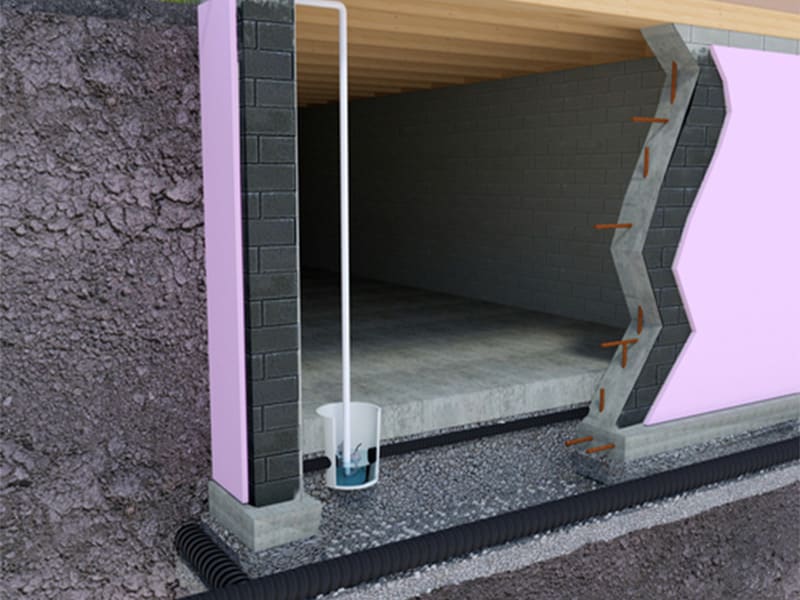
Interior systems manage water that has already entered the foundation. They typically include drainage channels, sump pumps, and interior sealants. They are less disruptive and less expensive but do not stop water at the source. Best for: older homes where exterior excavation isn’t feasible.
🛡️ Exterior Waterproofing
Exterior systems stop water before it ever touches your foundation. They involve excavating around the foundation and applying a waterproof membrane directly to the exterior wall, combined with drainage boards and systems. Best for: new construction and homes in high-risk flood zones.
Leading industry organizations including the #Waterproofing Contractors Association and the #American Concrete Institute both recommend exterior waterproofing as the gold standard for new construction and major foundation remediation projects.
The Science Behind Why Your Foundation Is Failing Right Now
To understand why foundation waterproofing has become so urgent, you need to understand what’s happening beneath your feet. Foundations face four primary water-related threats, all of which have intensified with changing climate patterns:
- Hydrostatic Pressure: As groundwater levels rise after heavy rainfall, water pushes against your foundation walls from every direction. Even reinforced concrete will eventually crack under sustained hydrostatic pressure. The #EPA’s climate indicators data confirms flood frequency has increased significantly across most of the U.S.
- Soil Expansion and Contraction: Clay-rich soils absorb water and expand, exerting enormous lateral pressure on foundation walls. They then dry and contract, creating gaps that allow water to seep in. This cycle, repeated over seasons, creates progressive structural damage.
- Poor Drainage and Grading: When the ground around your home slopes toward the foundation rather than away from it, every rainstorm funnels water directly into your foundation. This is the most preventable cause of foundation water damage — and one of the most common.
- Cracks and Penetrations: Utility lines, window wells, and naturally occurring concrete cracks all create entry points for water. Once water finds a way in, it exploits that opening relentlessly, widening cracks through freeze-thaw cycles.
Research Finding: A 2024 study published in the #Journal of Hydrology found that urban areas have experienced a 37% increase in extreme precipitation events over the past two decades, with projections indicating continued intensification. Homes built before 2000 were found to be disproportionately vulnerable due to inadequate original waterproofing standards.
Foundation Waterproofing Methods: A Complete Comparison
Not all foundation waterproofing products and methods are created equal. Here is a comprehensive, honest comparison of the most common systems used today:
| Method | How It Works | Best For | Lifespan | Effectiveness |
|---|---|---|---|---|
| Polyurea Coating | Sprayed-on elastomeric membrane that bonds directly to concrete, creates seamless waterproof barrier | Exterior foundation walls, high-movement areas | 30+ years | ⭐⭐⭐⭐⭐ Excellent |
| Crystalline Waterproofing | Penetrates concrete and forms crystals that fill capillary tracts and cracks | New construction concrete foundations | Permanent | ⭐⭐⭐⭐⭐ Excellent |
| HDPE Drainage Board | Dimpled sheet membrane drains water away from foundation wall | Combined with membrane systems | 25+ years | ⭐⭐⭐⭐ Very Good |
| Bentonite Clay | Natural clay panels that swell when wet to seal against water | Below-grade applications | 20+ years | ⭐⭐⭐⭐ Very Good |
| Interior Drainage System | Perforated pipes collect water and route to sump pump | Existing homes, managed water intrusion | 15–25 years | ⭐⭐⭐ Good (management, not prevention) |
| Bituminous Damp-Proofing | Asphalt-based coating applied to exterior wall | Low-risk, dry climates only | 5–10 years | ⭐⭐ Poor (cannot resist hydrostatic pressure) |
| Hydraulic Cement | Fast-setting cement fills active leaks in cracks | Emergency crack repair only | 1–5 years | ⭐ Very Poor long-term |
Industry data and our professional experience consistently confirm that polyurea-based waterproofing coatings represent the most technologically advanced and durable foundation waterproofing solution available in 2025. Polyurea sets in seconds, is highly flexible (critical for foundations that move), completely seamless, and resistant to UV, chemicals, and temperature extremes. Learn more about the science of polyurea at the #Polyurea Development Association.
Warning Signs: Does Your Foundation Need Waterproofing Right Now?
Many homeowners wait until a crisis to address foundation waterproofing. Don’t be one of them. Here are the critical warning signs that your foundation needs professional attention immediately:
- White, chalky deposits on basement or foundation walls (efflorescence) — a sign of water moving through concrete
- Visible horizontal or stair-step cracks in foundation walls — indicates hydrostatic pressure damage
- Musty odors in your basement, even when it appears dry
- Peeling paint or blistering on basement walls or floors
- Water stains or tide marks on basement walls indicating previous flooding
- Rust stains from corroding rebar or metal fasteners inside concrete
- Bowing or bulging foundation walls — a structural emergency requiring immediate attention
- Mold or mildew growth anywhere in the basement or crawl space
- Windows and doors in the home that have recently become harder to open or close
- Sump pump running continuously or failing frequently
- Water pooling near the foundation after rain events
If you are experiencing three or more of these signs, your foundation waterproofing situation is urgent. Contact a professional immediately. The #Bob Vila Foundation Guide and the #HomeAdvisor Foundation Waterproofing Resource provide additional guidance on assessing your risk level.
The Real Cost of Foundation Waterproofing (And the Real Cost of NOT Doing It)
One of the biggest barriers homeowners face is the perceived cost of professional foundation waterproofing. Let’s look at the honest numbers on both sides of the equation.
Foundation Waterproofing Investment
- Interior drainage system with sump pump: $3,000–$8,000 (average home)
- Exterior waterproofing membrane (partial): $8,000–$15,000
- Full exterior foundation waterproofing: $15,000–$30,000+
- Polyurea spray coating (exterior): $5,000–$20,000 depending on sq footage
- Crawl space encapsulation: $2,500–$8,000
Cost of NOT Waterproofing Your Foundation
- Water damage remediation after a single flood event: $5,000–$70,000+
- Structural foundation repair (after serious damage): $10,000–$100,000+
- Mold remediation: $2,000–$6,000 per event, recurring
- Loss of home value: 10%–30% reduction per the #National Association of Realtors
- Insurance premium increases: $500–$2,000+ per year after a water damage claim
- Health costs from mold exposure: Incalculable, particularly for families with children or elderly members
The math is unambiguous. Professional foundation waterproofing is not a luxury — it is the most cost-effective home improvement investment you can make in 2025.
How Climate Change Is Rewriting the Foundation Waterproofing Rulebook
The 2025 reality is that standard waterproofing guidance written 20 years ago no longer applies. Climate scientists at institutions including #NASA’s Climate Change portal and #the Intergovernmental Panel on Climate Change (IPCC) have confirmed several trends that directly affect foundation waterproofing requirements:
- More intense rainfall events: “100-year storms” are now occurring every 5–15 years in many regions
- Higher groundwater tables: Prolonged precipitation periods are raising groundwater levels in areas historically considered low-risk
- Increased soil saturation: Soils that once drained effectively between rain events now remain saturated for longer, dramatically increasing hydrostatic pressure on foundations
- More frequent freeze-thaw cycles: In northern climates, warmer winters with more freeze-thaw events accelerate foundation cracking
This is precisely why the viral flood footage of 2024–2025 struck such a nerve. Homeowners in neighborhoods that had never flooded before suddenly found themselves underwater. “We bought this house 20 years ago and never had a drop of water in the basement,” became one of the most heartbreaking refrains of the news cycle. Their homes weren’t poorly built — they simply weren’t built for the climate of today.
Step-by-Step: What to Expect During a Professional Foundation Waterproofing Project
If you’ve decided to invest in professional foundation waterproofing, here is exactly what a best-in-class process looks like:
- Comprehensive Foundation Inspection: A qualified waterproofing contractor inspects the entire foundation — interior and exterior — documenting all cracks, penetrations, drainage issues, and areas of concern. This typically takes 1–2 hours.
- Customized Waterproofing Plan: No two foundations are identical. Your contractor should provide a written, itemized waterproofing plan specific to your foundation type, soil conditions, and risk profile.
- Surface Preparation: The foundation surface must be thoroughly cleaned, all cracks repaired with appropriate materials, and any loose or deteriorating concrete removed.
- Membrane or Coating Application: The primary waterproofing material is applied — whether polyurea spray coating, crystalline admixture, sheet membrane, or another system appropriate to your situation.
- Drainage System Installation: A drainage board or dimple mat is installed against the exterior foundation, directing water away from the structure and into a proper drainage system.
- Backfill and Grade Correction: Soil is carefully replaced and graded to ensure positive drainage away from the foundation — a minimum 6-inch drop over the first 10 feet.
- Interior Sump System (If Applicable): Interior drainage channels and a high-quality sump pump are installed as a secondary line of defense.
- Final Inspection and Warranty: The completed system is inspected and a transferable written warranty is provided.
Foundation Waterproofing for New Construction: Don’t Make the Same Mistake
If you are building a new home or overseeing a new construction project, this section is critically important. The most common and most costly mistake in new construction is under-specifying the waterproofing system to save money during the build.
The #International Code Council’s building codes set minimum standards for foundation waterproofing, but minimums are not maximums. In flood-prone areas or regions with high clay content soils, installing a system that merely meets code is often insufficient. The marginal cost of upgrading from basic damp-proofing to a full polyurea or crystalline waterproofing system during construction is a fraction of what remediation costs after the fact.
Key new construction waterproofing specifications to insist on:
- Exterior waterproofing membrane rated for positive-side hydrostatic pressure
- Protection board to prevent membrane damage during backfill
- Granular drainage composite extending from footing drain to grade
- Properly installed and daylighted perimeter drain tile
- Waterproofed penetrations for all utility entries
Frequently Asked Questions About Foundation Waterproofing
How long does foundation waterproofing last?
The lifespan of a foundation waterproofing system depends heavily on the materials used and quality of installation. High-quality polyurea coatings and crystalline systems can last 30+ years or even permanently. Interior drainage systems typically last 15–25 years with proper maintenance. Damp-proofing alone may only last 5–10 years.
Does homeowners insurance cover foundation water damage?
Standard homeowners insurance policies typically do not cover gradual water damage or flooding from groundwater. Flood damage generally requires a separate flood insurance policy through the #National Flood Insurance Program (NFIP). Some water damage from sudden burst pipes may be covered. Always read your policy carefully and speak with your agent about your specific coverage.
Can I waterproof my foundation myself?
DIY waterproofing products exist for minor crack repairs and interior sealants, but they are not a substitute for professional waterproofing. The most effective and durable systems — particularly exterior polyurea membranes — require professional application equipment and expertise. Given the stakes involved, professional waterproofing is almost always the right investment.
What is the best foundation waterproofing material in 2025?
Based on independent testing, contractor data, and engineering assessments, polyurea spray coatings combined with crystalline concrete admixtures represent the leading edge of foundation waterproofing technology in 2025. Polyurea in particular offers unmatched flexibility, adhesion, cure speed, and longevity.
How do I know if I need interior or exterior foundation waterproofing?
Exterior waterproofing is the superior solution and is always recommended for new construction or when major excavation work is already planned. Interior systems are typically chosen for existing homes where exterior excavation would be prohibitively disruptive or expensive. Many homes benefit from a combined approach. A professional evaluation of your specific foundation and site conditions is the only way to make the right determination for your home.
Is foundation waterproofing worth it if I’m planning to sell my home?
Absolutely. According to data from the #National Association of Realtors, foundation and waterproofing improvements consistently rank among the highest ROI home improvements when it comes to resale value and buyer confidence. Homes with documented, warranted waterproofing systems sell faster and at higher prices than comparable homes without them.
Don’t Wait for the Next Storm to Find Out the Hard Way
Expert Foundation Waterproofing brings industry-leading polyurea technology and decades of experience to protect your home. Free inspections. Transferable warranties. Real results.
The Bottom Line: Foundation Waterproofing in 2025 Is Non-Negotiable
The viral flood images of 2024 and 2025 weren’t just tragedy content — they were a warning. The climate has changed, the risks have escalated, and the standards that once protected homes are no longer adequate in a world of record rainfall, rising groundwater, and more intense weather events. Foundation waterproofing has moved from a smart optional upgrade to an essential home protection system.
The good news? The technology available in 2025 — particularly polyurea membranes, crystalline systems, and integrated drainage solutions — is more effective, longer-lasting, and more accessible than at any point in history. There has never been a better time to protect your home, your family, and your investment.
If you take one thing from this guide, let it be this: don’t wait until water is in your basement to think about waterproofing. By then, the conversation is no longer about prevention — it’s about survival. Schedule your professional foundation inspection today and get ahead of the storm.
For additional reading, explore resources from the #Building Science Corporation, the #U.S. Department of Housing and Urban Development’s Healthy Homes program, and the #EPA’s Mold and Moisture Resources for more on protecting your home’s structural integrity and indoor air quality.