The Question Every Homeowner Asks First — and Deserves an Honest Answer To
You have noticed moisture in the basement. Maybe it is a crack with a telltale rust stain running from it. Maybe it is water pooling in the corner after every significant rain. Maybe it is simply the musty smell that greets you whenever you descend those stairs. You know something needs to be done. And before you call anyone, before you commit to anything, you need to understand what this is going to cost.
This guide gives you that honest, comprehensive answer — not a vague “it depends” brush-off, but a real breakdown of what professional basement waterproofing actually costs, what drives those costs up or down, what you should be skeptical of, and how to evaluate whether a quote you receive represents genuine value or a pricing problem.
The Short Answer on Basement Waterproofing Cost
Basement waterproofing projects in the United States typically range from a few hundred dollars for a single-crack injection repair to $15,000 or more for comprehensive exterior waterproofing of a large foundation. The vast majority of complete interior drainage system installations — the most common comprehensive solution — fall in the range of $5,000 to $12,000 for an average home, depending on basement perimeter length, local labor markets, and system specifications.
Here is a more detailed breakdown by solution type:
Crack Injection: $250 – $800 per crack
Professional polyurethane or epoxy crack injection for a single vertical crack in a poured concrete wall is among the most cost-effective foundation repairs available. The cost reflects the material, labor, and typically a warranty against future water intrusion through that repaired crack. For a home with a single problematic crack and no other water intrusion issues, this targeted repair can solve the problem completely at minimal cost.
Interior Drainage System (Partial): $1,500 – $4,000
A partial interior drainage system — addressing only one or two walls, or a single problem area — costs significantly less than a full perimeter system. This approach works well when water intrusion is concentrated in one area, such as a single wall that contacts a hillside or a corner that catches runoff.
Interior Drainage System (Full Perimeter): $5,000 – $12,000+
A full perimeter interior drainage system — the most comprehensive interior waterproofing solution — involves cutting a trench around the entire basement floor perimeter, installing drainage channels, routing water to a sump pit, and installing a high-performance sump pump with backup. This is the price range most homeowners face when dealing with pervasive basement water issues, and it is the solution that provides truly comprehensive protection. For larger basements or in high-cost-of-living markets, costs may exceed this range.
Sump Pump Installation: $600 – $2,500
A new sump pump installation — including the basin, pump, discharge line, and backup system — typically falls in this range. The wide spread reflects differences between a simple replacement in an existing pit versus a new installation requiring pit excavation, as well as the significant cost difference between basic and premium pump systems with battery backup and smart monitoring.
Exterior Waterproofing: $8,000 – $30,000+
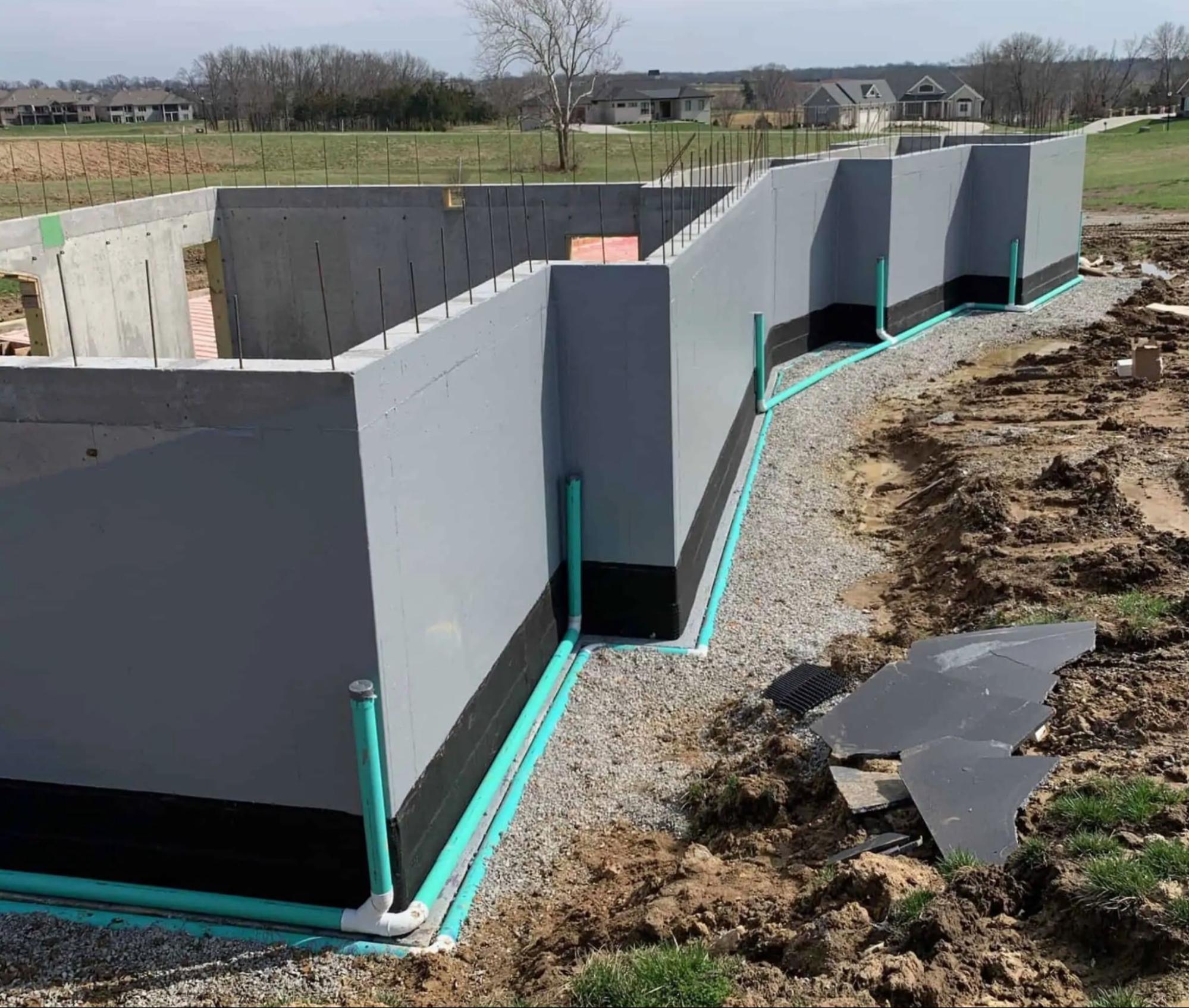
Exterior waterproofing is the most labor-intensive solution because it requires excavating around the foundation perimeter. Excavation costs are the dominant driver — they depend on basement depth, soil conditions, accessibility (is there space for equipment?), and the presence of landscaping, decking, or structures that complicate access. Exterior waterproofing is the most comprehensive and durable solution available, and for many situations — particularly older homes with deteriorated exterior coatings — it is the right long-term investment despite the higher upfront cost.
Crawl Space Encapsulation: $3,000 – $8,000
Crawl space encapsulation — sealing the crawl space floor and walls with a heavy-duty vapor barrier, sealing vents, and installing appropriate dehumidification — transforms a chronically damp crawl space into a controlled environment that protects floor structures, HVAC equipment, and indoor air quality throughout the home. Cost depends on crawl space size, existing moisture levels, and the scope of the encapsulation system.
What Drives Basement Waterproofing Costs Up
Basement size: Linear footage of perimeter directly drives the cost of drainage system installation. More perimeter means more trench, more drain material, and more labor.
Water table depth and volume: Homes in areas with high water tables or adjacent to bodies of water require more powerful pump systems and more robust drainage solutions.
Structural repairs needed: If bowing walls, failed wall anchors, or significant settlement require structural correction before or alongside waterproofing, costs increase accordingly. These are separate work scopes with separate cost drivers.
Access and excavation challenges: Exterior waterproofing costs are heavily influenced by site access. A basement under a large deck, tight against a fence, or with mature landscaping near the foundation will cost more to excavate than one with clear open access.
Finished basement: Waterproofing a finished basement requires removing and replacing flooring, drywall, and other finishes, adding cost beyond the waterproofing work itself. Some homeowners choose to waterproof before finishing a basement specifically to avoid this scenario.
Regional labor markets: Labor costs vary significantly across the country. Work that costs $8,000 in a mid-size Midwest city may cost $15,000 in a major coastal metro for the same scope.
What Should Make You Skeptical in a Waterproofing Quote
The basement waterproofing industry, unfortunately, includes operators who use high-pressure sales tactics, misleading pricing strategies, and inadequate warranties. Protect yourself by recognizing these red flags:
The “today only” price: Any contractor who tells you the price is only valid today — and will increase significantly if you do not sign immediately — is using a manipulation tactic, not offering a genuine discount. Walk away. A company confident in its work does not need to rush you.
Dramatically low bids: A quote that is less than half the price of two other reputable bids deserves careful scrutiny. Ask exactly what is included. Cut-rate waterproofing installations often use inferior materials, inexperienced labor, and limited warranties — and may require expensive correction within a few years.
No written warranty: Any waterproofing company unwilling to provide a written warranty on their work is a company that does not stand behind it. Reputable contractors offer written warranties — often lifetime, and many offer warranties that transfer to new homeowners, which is a powerful indicator of confidence in the work’s durability.
No site inspection before quoting: A legitimate waterproofing contractor will not quote a price without first inspecting your specific situation. Any company that quotes over the phone without seeing the basement is not providing a real quote.
Recommending only the most expensive solution without explanation: A trustworthy contractor explains why a particular solution is recommended, presents alternatives where appropriate, and is transparent about the tradeoffs. A contractor who jumps straight to the most expensive solution without explanation or alternatives should be questioned.
Is Basement Waterproofing Worth the Cost?
The question of cost should always be weighed against the cost of not acting. Consider:
The average basement flood restoration — removing water, drying the structure, replacing materials, addressing mold — costs between $10,000 and $30,000. That is one event. Chronic moisture over years produces compounding structural deterioration, persistent mold remediation costs, HVAC efficiency losses, and a significant drag on home market value that can easily exceed $20,000 to $50,000 in equity loss when the property is eventually sold.
A comprehensive interior drainage and sump pump system that costs $8,000 today and carries a lifetime warranty is not an expense. It is an investment with a demonstrably positive return — in structural preservation, in avoided remediation costs, in home value, and in the peace of mind that comes from knowing your home is protected.
How to Get an Accurate Waterproofing Quote
Follow this process to ensure you receive accurate, comparable quotes:
First, get at least three quotes from established local companies — not national chains known for high-pressure sales, but companies with years of local presence and verifiable local references. Ask each contractor to perform an in-person inspection before quoting. Ask each to explain in writing what they found, what they recommend, why they recommend it, and what alternatives exist.
When comparing quotes, do not simply compare bottom-line numbers. Compare exactly what is included: the type and quality of drainage materials, the pump brand and model, whether backup systems are included, the length and terms of the warranty, and whether permits are pulled where required.
Ask each contractor directly: How long have you been in business? Are you licensed and insured? Can you provide three local references from projects similar to mine? What happens if I have a water intrusion event after your work is complete?
The answers to those questions will tell you as much as any number on a quote sheet.
Your Basement, Your Investment, Your Decision
Foundation waterproofing is not a discretionary luxury. It is the protection of your greatest asset. Understanding what it costs, what drives those costs, and how to evaluate the quality of what you are being offered puts you in control of a decision that will affect your home — and your family’s health and comfort — for decades to come.
Invest wisely. Demand transparency. Choose experience and integrity over the cheapest number on the page.
Expert Foundation Waterproofing provides free, no-pressure on-site inspections and detailed written quotes. We explain exactly what we find, exactly what we recommend, and exactly why — so you can make the most informed decision possible. Call us or request your free inspection online today.